Anti-Graffiti Film
A replaceable sacrificial layer that protects storefront glass from scratches, acid etching and vandalism.

Storefront Window Protection
Anti-graffiti, solar-control and safety film solutions for storefront glass, entry doors and customer-facing commercial spaces.
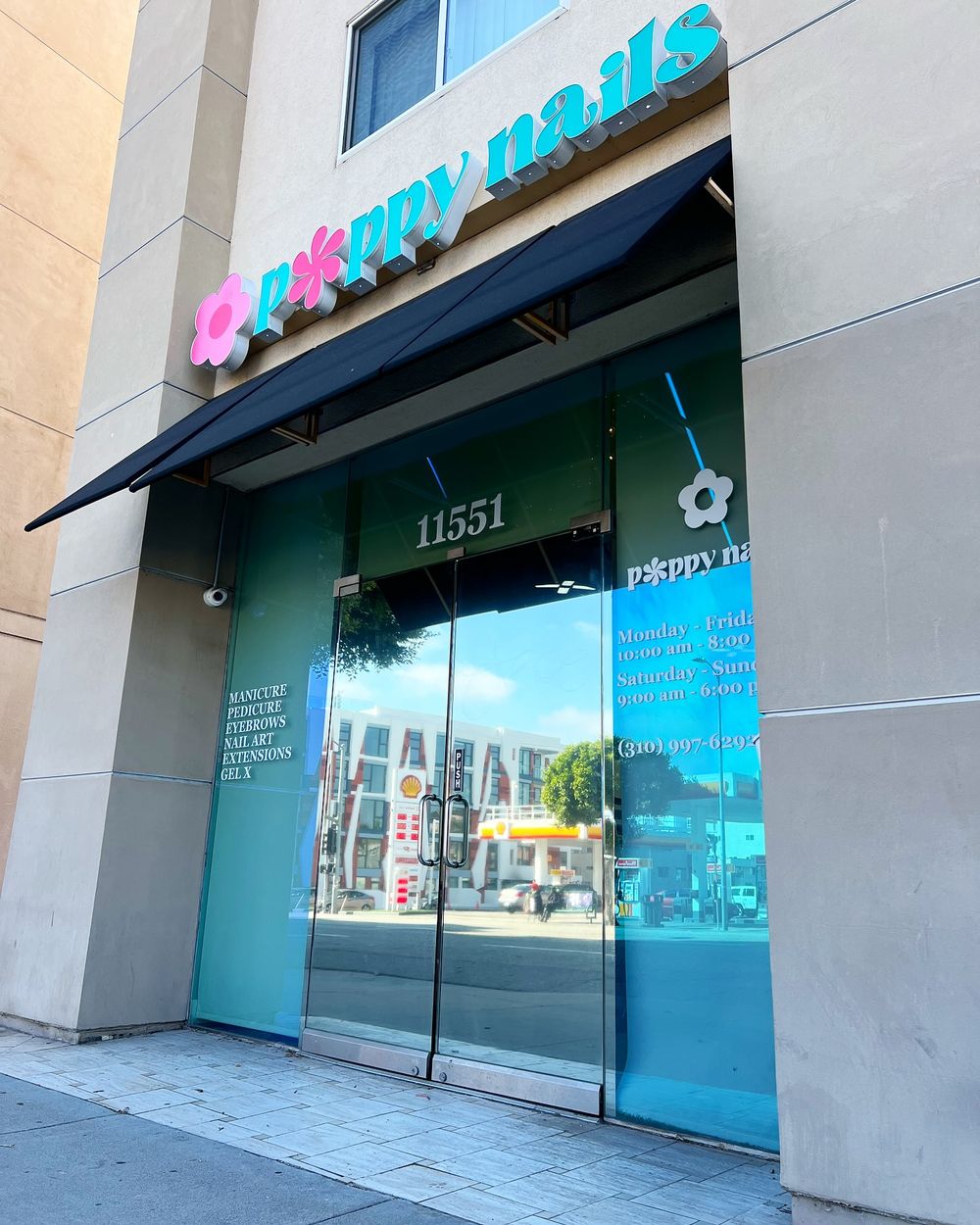
Common reasons clients reach out
Film types
A replaceable sacrificial layer that protects storefront glass from scratches, acid etching and vandalism.
Reduces heat and glare in customer-facing spaces while helping protect displays and interior finishes.
Helps hold shattered glass together and increases the time and effort required to create an opening.
Provides nearly invisible UV protection for merchandise, displays and interior finishes.
Adds privacy, logos, patterns or visual separation to storefront and interior commercial glass.
Combines compatible film solutions when the storefront needs heat control, glass protection and security support.
Choosing a film
| Your goal | Recommended film |
|---|---|
| Protect against scratches and vandalism | Anti-graffiti film |
| Reduce heat and glare | Solar-control film |
| Delay forced-entry attempts | Safety & security film |
| Protect merchandise from UV | Clear UV film |
| Add privacy or branding | Decorative or branded film |
| Address multiple issues | Combined film package |
Vandalism
Anti-graffiti film acts as a replaceable sacrificial layer over the glass. When the film takes scratching, tagging or etching, it can usually be removed and replaced without replacing the original glass — which is normally the cheaper and far less disruptive path for a working storefront.
Security
Safety and security film helps hold broken glass together and can meaningfully increase the time and effort required to penetrate a damaged storefront opening. 8 mil is a practical entry-level option, while 12 mil, 16 mil and thicker systems provide progressively greater resistance to repeated impact. Overall performance depends on the glass, frame and attachment system.
Comfort
Solar-control film addresses the heat and light side of a storefront, which matters most where staff work all day next to the glass and where merchandise sits in direct sun.
Why homeowners install it
Real projects
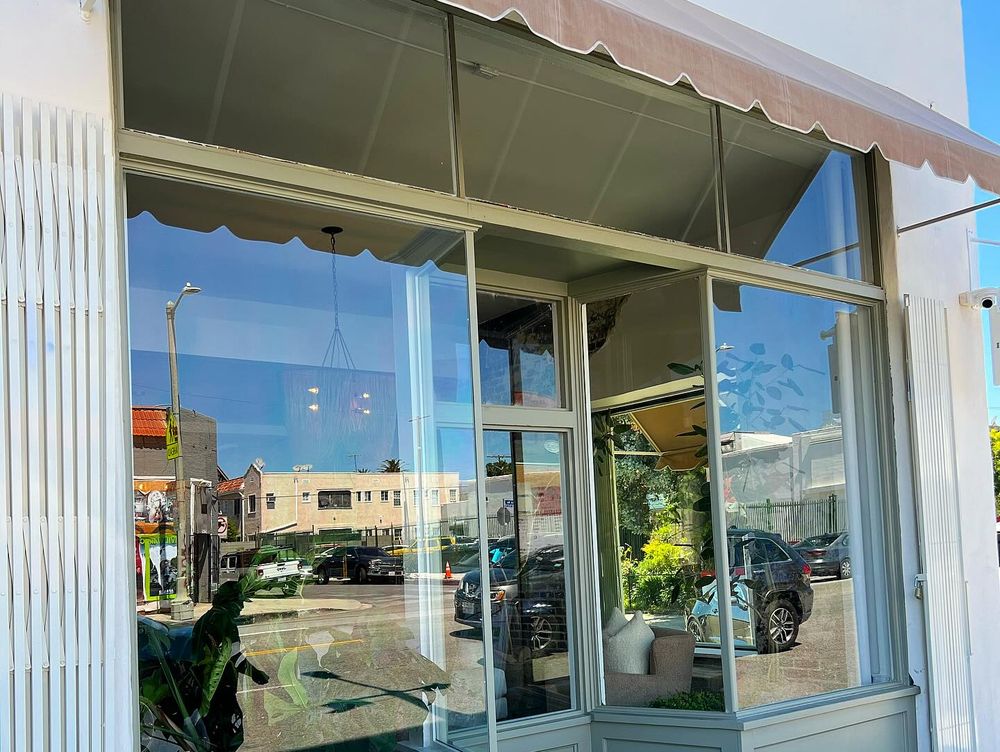
The existing storefront glass was polished to remove surface damage, then protected with a new replaceable layer of anti-graffiti film.
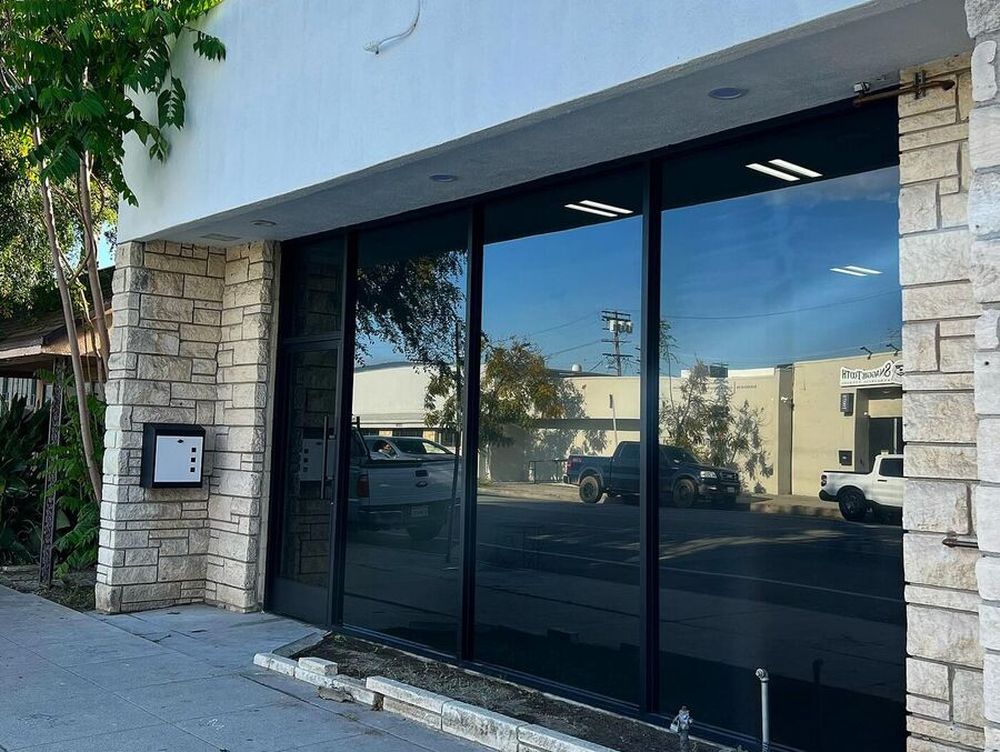
Dark solar-control film installed across the full storefront glazing to cut heat and glare and give the frontage a clean, uniform look from the street.
Process
Share photos of the storefront, panel count, approximate sizes and the problems you want to solve.
We review the glass type, existing damage, sun exposure, access and security concerns.
Choose anti-graffiti, solar-control, safety film or a compatible combined approach.
The glass is prepared and the selected film is installed with attention to storefront access and business operations.
Sacrificial anti-graffiti film can be replaced later if damaged, while other films receive care and curing instructions.
FAQ
Anti-graffiti film, because it is designed to be sacrificial — the film takes the scratching or etching instead of the glass, and the film is what gets replaced. It does not prevent vandalism from happening; it changes what the damage costs you.
Material thickness. 4 mil is a practical standard for everyday storefront exposure, while 7 mil gives more material to absorb deeper scratches and heavier damage. Which one suits a given storefront depends on how exposed the glass is and how often it has been hit before.
That is the point of it. In most cases the damaged film is removed and a new layer applied, leaving the original glass in place — normally far cheaper and quicker than replacing a storefront panel. If the damage went through to the glass itself, the glass still needs attention.
Yes. Solar-control film reduces heat build-up and glare in the customer-facing space and helps limit UV exposure to merchandise and finishes. How much depends on the specific film selected and the glass it goes on, so we confirm the product before quoting numbers.
Often yes — some films carry both a solar-control layer and a safety interlayer, and in other cases products can be layered. Compatibility has to be confirmed for the specific glass and products first, since the wrong combination can create thermal stress on the glass.
No film guarantees that entry is impossible. What safety film does is hold the broken glass together so the opening does not clear in one hit, which increases the time, effort and noise involved. Standard architectural film is also not bullet-resistant glazing.
It depends on the film. Clear safety and clear UV films are close to invisible and leave the storefront looking unchanged. Solar-control and decorative films are visible by design, since the tint or finish is doing the work.
Many storefronts are completed within a day, depending on the number and size of panels, the film type and access. Thicker security films are slower to work with. We confirm the timeline once we have seen photos and panel counts.
Yes, and it is a common request for retail and restaurants. Scheduling evenings or early mornings keeps the storefront clear during trading hours — tell us your hours when you send photos and we will work around them.
It varies by product, how exposed the glass is, whether the film is interior or exterior and how it is maintained. Anti-graffiti film is intended to be replaced periodically by design. We confirm the manufacturer warranty for the specific film used on your project.
Where we work
We install storefront window film throughout Los Angeles and surrounding areas for retail stores, offices, restaurants, commercial entries and customer-facing glass.
Next step
Send photos of the storefront, panel count, approximate measurements and your ZIP code. We’ll recommend a film system based on the problems you want to solve.